Oct 14, 2026
#128 The First Muslim and Gaelic BBC Broadcasts
The British Broadcasting Century with Paul Kerensa
100 Years of the BBC, Radio and Life as We Know It. Be informed, educated and entertained by the amazing true story of radio’s forgotten pioneers. With host Paul Kerensa, great guests and rare archive from broadcasting’s golden era. Original music by Will Farmer. www.paulkerensa.com/oldradio
Listen on:


Episodes
Episodes



Sep 15, 2026
Sep 15, 2026
46 min
The BBC's first:
in-house drama for adults
non-Shakespeare drama
comedy drama
studio production of a modern stage play
drama to be reviewed on air
writer to be on two channels at once
...however you phrase it, Gertrude Jennings' Five Birds in a Cage deserves far more attention than it's had for the past century and a bit.
In our moment-by-moment British broadcasting timeline it's 29 November 1923 when the BBC set the template for the modern radioplay with this adaptation of Jennings' satirical stageplay about five Tube passengers trapped in a lift. Will they get out? Will they throttle each other first? What does it have in common with Blackadder Goes Forth?
The BBC had broadcast a drama aimed at children (The Truth about Father Christmas by Phyllis Twigg - see episode 72 of this podcast), some Shakespeare plays (see episode 55 of this podcast), an excerpt of GK Chesterton and the occasional on-location panto. But the in-house modern radio drama was a new idea.
Although Richard Hughes' A Comedy of Danger from 1924 is credited as the first original radio play for adults, Five Birds in a Cage was an impressive adaptation of Gertrude Jennings' 1915 stage play of the same name - and it was reviewed on air too.
In this episode, three experts bring you everything you never knew you needed to know about Jennings and her work. Professor Tim Crook is Emeritus Professor at Goldsmiths University of London, and author of Writing Audio Drama among many other books, as well as the superb blog at kulturapress.com. Nicola Morgan and Dr Caroline Rance host the excellent and vital She Wrote Too podcast, elevating and amplifying under-appreciated female writers from the early twentieth century.
Plus hear that first review of a radio play by Archibald Haddon the first BBC drama critic. We tell of other forgotten radio drama moments, including Howard Rose's recollections of a dramatic broadcast on 2 September 1922, pre-BBC. And you'll hear Peter Eckersley and Rolls Wynn on their Cyrano de Bergerac broadcast from 17 October 1922. Plus the bizarre quirk that makes her the first writer to have two different productions on two different channels at the same time... for five minutes anyway.
Gertrude Jennings wrote quite a play - a social satire, a farce, a character comedy, with sound effects and a point to make. We're delighted to shout about it here - and see our shownotes below for She Wrote Too's podcast about her too, as well as Tim Crook's writing about her and other forgotten female writers.
SHOWNOTES:
She Wrote Too podcast on Gertrude Jennings: https://shewrotetoo.substack.com/p/five-birds-in-a-cage
Tim Crook's blog about Gertrude Jennings: https://kulturapress.com/2022/08/10/gertrude-e-jennings-bbcs-pioneering-one-act-playwright/
Tim Crook's academic article 'Rewriting the Beginning of BBC Audio Drama History- Three Women Playwrights and Their Contribution to British Radio Drama Culture': https://www.tandfonline.com/doi/full/10.1080/19376529.2023.2257184
Sutton Elms website on Howard Rose: https://www.suttonelms.org.uk/dspenser9.html
Alan Beck's 'The Invisible Play' on Gertrude Jennings: https://www.savoyhill.co.uk/invisibleplay/body/3a1.html (some of his website is missing/broken - help in finding the missing pages would be appreciated!)
Listen to The Truth about Phyllis Twigg on BBC Sounds: https://www.bbc.co.uk/sounds/play/m002ntmx
Catch out first interview with Tim Crook, on Phyllis Twigg, on episode 72 of this podcast: https://bbcentury.podbean.com/e/the-first-radio-dramatist-the-truth-about-phyllis-twigg/
Email the podcast at: https://paulkerensa.com/contact.php
Review the podcast on Apple Podcasts etc? Thanks!
Our latest Substack is on: What have BBC promos ever done for us?... paulkerensa.substack.com
Find us on BlueSky: bsky.bbcentury.social
Join Paul's mailing list
Paul's show is on old radio is on tour and available for booking - book it!: paulkerensa.com/tour
This podcast is not made by today's BBC. It's just about the old BBC.
Original podcast music is by Will Farmer.
Support us on Patreon? £5/mth, and get extra videos, writings, readings etc: patreon.com/paulkerensa - thanks!
Or support this project with a one-off tip: ko-fi.com/paulkerensa - thanks too!
Please share/rate/review this podcast if you like - it all helps.
Next time, Episode 128: Early Muslim and Gaelic voices on the BBC
More on this broadcasting history project at paulkerensa.com/oldradio
Aug 22, 2026
Aug 22, 2026
49 min
26 November-2 December 1923, and the BBC and the USA had a little conversation. Well, a big conversation, across an ocean, across a week, heard by listeners east and west of the Atlantic.
Our moment-by-moment timeline of British broadcasting has reached this momentous moment (aren't all moments momentous?) when British ears heard America, and American ears heard Britain, via radio.
It was all Radio Broadcast magazine's fault/idea. Its co-owner, Frank Doubleday of Doubleday, Page and Co, thought it would be nice for the two countries to hear each via some organised tests - and while US radio had reached the UK, the time difference made it trickier for the signals to be heard the other way around. It meant BBC staff setting their alarms for a few days of 3am broadcasts, and Biggin Hill Aerodrome proved the ideal place for the engineers to pick up what America was sending.
So this episode comes live (well, recorded) from Biggin Hill Aerodrome. You can even hear the odd plane.
It was here that BBC Deputy Chief Engineer Captain West and team listened for US radio - and ate Mrs West's fried sausages. Oh yes, we bring you all the details, including Reith and Eckersley singing God Save the King...
...and we bring you a guest: BBC producer and presenter Josephine McDermott has made an Archive on 4 documentary on international shortwave radio - The Sound of Soft Power. Link below, have a listen, and hear her tell us of the joy of finding such archive.
A second part of the 1923 experiments came after Christmas that year, so a second part of this story will be on the podcast in a few episodes time - around ep 132, when Prof Simon J Potter will enlighten us on the BBC's global reach, linked to the Pittsburgh and Paris broadcasts heard on the BBC in late 1923.
SHOWNOTES:
Hear Josephine McDermott's Radio 4 documentaries for Archive on 4: The Sound of Soft Power - https://www.bbc.co.uk/programmes/m002wskb - and https://www.bbc.co.uk/programmes/m0026tw0
Research this episode is thanks to a variety of places, inc. Andrew Barker our Newspaper Detective (see his daily posts on our Facebook group), Thomas H white's website https://earlyradiohistory.us/, Myles Eckersley's book Prospero's Wireless, and Edward Pawley's book BBC Engineering 1922-1972.
Email the show at: https://paulkerensa.com/contact.php
Review the show on Apple Podcasts etc? Thanks!
Our latest Substack is on: What have BBC promos ever done for us?... paulkerensa.substack.com
Find us on BlueSky: bsky.bbcentury.social
Join Paul's mailing list
Paul's show is An Evening of (Very) Old Radio: The BBC Then and Now - and in late 2026 it plays Gloucester, Hartley Wintney and more: paulkerensa.com/tour
This podcast is not made by today's BBC. It's just about the old BBC.
Original podcast music is by Will Farmer.
Support us on Patreon? £5/mth, and get extra videos, writings, readings etc: patreon.com/paulkerensa - thanks!
Or support this project with a one-off tip: ko-fi.com/paulkerensa - thanks too!
Please share/rate/review this podcast if you like - it all helps.
Next time, Episode 127: Early radio drama from Gertrude Jennings.
More on this broadcasting history project at paulkerensa.com/oldradio
Jul 24, 2026
Jul 24, 2026
49 min
We're back in our moment-by-moment timeline of British broadcasting's early days, and it's just after the BBC's first birthday...
16 November 1923: Sheffield 6FL becomes the BBC's first relay station, rebroadcasting programmes from Manchester.
But will there be original local content too? What of Sheffield's pre-BBC radio station? And is it coincidence that '6FL' could link to 'Fred Lloyd' - the man who made Sheffield broadcasting possible? Was it not he who marched into BBC Chief Engineer Peter Eckersley's office and said: "Have you heard the wireless in Sheffield? It's like an insurrection in hell!"
...Discover the truths, the maybes, the pioneering moments and the hidden history of this long-ignored station, from our Newspaper Detective Andrew Barker, who I'm convinced knows more than anyone on the planet about the Sheffield relay station 6FL, and what came before it.
Plus exclusive rare audio from Harry Lloyd in 1968, talking about how he and his dad began it all. We're so grateful to today's BBC Radio Sheffield and Sheffield City Archives for permission to share this clip, with an insight into not only how Sheffield broadcasting began in 1923, but the first days of local radio when that interview was broadcast on BBC Radio Sheffield, just months into its existence as the second local radio station of the modern era.
Thanks to Fred Lloyd, the Sheffield station achieved far more than the history books might let on - bringing the first educational broadcast to schools before the BBC, and the first broadcasting bishop.
A few key dates of Fred Lloyd and the Sheffield station's story, thanks to Andrew Barker...
20 Oct 1922: Fred Lloyd becomes President of the Sheffield and District Wireless Society, unusually giving his inaugural speech by radio from his home, to a packed hall of 800 members - facing an empty stage with just a loudspeaker.
31 Dec 1922: The Bishop of Sheffield, the local MP and a local newspaper editor broadcast from Fred Lloyd's home. That's the first bishop on air!
21 March 1923: Britain's first broadcast to schools, three of them in Sheffield, thanks to Fred Lloyd.
12 April 1923: BBC Chief Engineer Peter Eckersley visits Sheffield, and tests are carried out. Will the BBC take it over? (Yes.) The relay idea is born days later.
9 July 1923: Test transmissions begin at the university, again thanks to Fred Lloyd.
14 August 1923: The first attempt at relaying another station.
17 August 1923: Fred Lloyd says he hopes local programming continues, despite the relaying of other stations. Will it?
1 Sept 1923: Local newspapers run the Sheffield station for an evening.
13 Sept 1923: Fred Lloyd gives the experimental station's farewe... oh that would be spoiling it. You'll have to listen.
16 Nov 1923: Sheffield 6FL opens, under the BBC banner.
...So that's where we are in our timeline. Coming up on the podcast: November 1923 continues with transatlantic broadcasting, relays from France, early drama, an upcoming election, and BBC's first Muslim broadcaster. Stay subscribed and see the shownotes below for our social mediums and the like...
SHOWNOTES:
Thanks to BBC Radio Sheffield and Sheffield City Archives for permission to use the old clips. They were stars to deal with, and bring me hope that old audio needn't stay on shelves behind closed doors. Thanks, folks!
Thanks Andrew Barker for finding the info and sharing it. See his 'On this day 100 years ago in broadcasting history' posts on our Facebook group: facebook.com/groups/bbcentury
Email the show at: https://paulkerensa.com/contact.php
Review the show on Apple Podcasts etc, and we may read it out on the podcast - and you can 'win' (you can't win) a piece of British broadcasting pretend history (there is no prize, do not believe these words)
Our latest Substacks - upcoming, What have BBC promos ever done for us?... paulkerensa.substack.com
Find us on BlueSky: bsky.bbcentury.social
Join Paul's mailing list
Paul's show is An Evening of (Very) Old Radio: The BBC Then and Now - and in late 2026 it plays Weston-super-Mare, Gloucester, the Isle of Wight, Hartley Wintney and more: paulkerensa.com/tour
This podcast is not made by today's BBC. It's just about the old BBC.
Original podcast music is by Will Farmer.
Support us on Patreon? £5/mth, and get extra videos, writings, readings etc: patreon.com/paulkerensa - thanks!
Or support this project with a one-off tip: ko-fi.com/paulkerensa - thanks too!
Please share/rate/review this podcast if you like - it all helps.
Next time, Episode 126: International broadcasting in November-December 1923.
More on this broadcasting history project at paulkerensa.com/oldradio
Jul 9, 2026
Jul 9, 2026
47 min
Broadcasting House, 1932: The BBC's first purpose-built home.
When it first opened, some likened it to a ship, others to a New York skyscraper. And it was once called a Palace of the Ether...
That's the title of a new book by architectural historian Dr Elizabeth Darling, who joins us this episode for an audio tour of the building's earliest incarnation - from the outside design and sculptures to the Concert Hall/Radio Theatre, via the unique studios and the art deco reception, complete with Latin motto and statute of The Sower, still there today.
It's an incredible building, and whether you know a lot or a little, I'm sure you'll learn something new about BH - whether it's the bomb that didn't bother the newsreader, the WW2 dormitory, or the only studio you could smoke in, surrounded by fake books.
For the last couple of years, I've given walking tours of central London via spots linked with broadcasting history. Not this year alas, so this audio tour of the building we usually start with will be just what you need instead.
Plus one of your reviews gets chosen to 'win' a pretend piece of broadcasting history, and we look at how the BBC might change going forward, if you were in charge...
Look out for Elizabeth Darling's book - see link below - and stay subscribed to the podcast for more tales of early British broadcasting. Next time, we're back in November 1923 for the BBC's ninth station, and its first relay station: 6FL Sheffield. And we've got some rare clips for you...
SHOWNOTES:
Palace of the Ether by Elizabeth Darling is published by Lund Humphries - it's a beaut: https://www.lundhumphries.com/products/palace-of-the-ether
Paul's show is An Evening of (Very) Old Radio: The BBC Then and Now - and this summer it plays Westbury in Wiltshire and Weston-super-Mare in Somerset: paulkerensa.com/tour
Email the show at: https://paulkerensa.com/contact.php
Paul's latest Substack, on the BBC cuts: paulkerensa.substack.com
Find us on Facebook: facebook.com/groups/bbcentury
Find us on BlueSky: bsky.bbcentury.social
Find Paul on Instagram: instagram.com/paulkerensa
Join Paul's mailing list
This podcast is not made by today's BBC. It's just about the old BBC.
Original podcast music is by Will Farmer.
Support us on Patreon? £5/mth, and get extra videos, writings, readings etc: patreon.com/paulkerensa - thanks!
Or support this project with a one-off tip: ko-fi.com/paulkerensa - thanks too!
Please share/rate/review this podcast if you like - it all helps.
Next time, Episode 125: We're back in our timeline in Nov 1923 for the first BBC relay station, Sheffield 6FL.
More on this broadcasting history project at paulkerensa.com/oldradio
Jun 25, 2026
Jun 25, 2026
36 min
On 1 January 1951, the BBC broadcast "a farming Dick Barton", aka "an everyday story of country folk", aka The Archers - the world's longest running broadcast drama.
Approximately 21,000 episodes later, it celebrates its diamond anniversary with a national tour of theatres, hosted by comedian and Archers fan Angela Barnes - who joins us this episode to tell us all about the show, and the show.
The live tribute features Archers cast members, a Q&A, an Ambridge-style pub quiz, and of course its iconic theme. It plays from Liverpool to London, Glasgow to Swansea. Enjoy!
Also this episode, less gladly, we consider the upcoming BBC cuts - and while we may not welcome news that Radio 4's The World Tonight or Midnight News are to go (and that's just the start), what would you cut, if you were DG?
I asked online, I wrote a Substack about it, and this episode we look at a few of the more frequent suggestions, from some of you. If you have further thoughts, do email the show and we might feature you next time.
We're also featuring your kind reviews of this podcast, if you've posted to Apple Podcasts. Thanks if so! If you haven't and would consider such a thing, please do and next time you-yes-you could be the proud winner of a fictitious piece of British broadcasting history...
SHOWNOTES:
The Archers Live at 75, on tour around the UK. More next time... https://www.fane.co.uk/the-archers
Listen to the earliest Archers there is: https://www.bbc.co.uk/sounds/play/p03nshmg
Paul's show is An Evening of (Very) Old Radio: The BBC Then and Now - and this summer it plays Westbury in Wiltshire and Weston-super-Mare in Somerset: paulkerensa.com/tour
We mention Watchet's fabulous Radio Museum - do go: https://www.radiomuseum.uk/
Email the show at: https://paulkerensa.com/contact.php
Paul's latest Substack, on the BBC cuts: paulkerensa.substack.com
Our Facebook group: facebook.com/groups/bbcentury
Find us on BlueSky: bsky.bbcentury.social
Find Paul on Instagram: instagram.com/paulkerensa
Join Paul's mailing list
This podcast is not made by today's BBC. It's just about the old BBC.
Original podcast music is by Will Farmer.
Support us on Patreon? £5/mth, and get extra videos, writings, readings etc: patreon.com/paulkerensa - thanks!
Or support this project with a one-off tip: ko-fi.com/paulkerensa - thanks too!
Please share/rate/review this podcast if you like - it all helps.
Next time, Episode 124: We're back in our timeline in Nov 1923 for the first BBC relay station, Sheffield 6FL.
More on this broadcasting history project at paulkerensa.com/oldradio
Jun 11, 2026
Jun 11, 2026
45 min
On this special episode, we delve into early television with Professor John Wyver, whose book and conference is all about those overlooked decades of Stooky Bill, I think that's a pen, and vertical screens no bigger than a postcard. Sound familiar?
2026 is a big television centenary. On 26 January 1926, John Logie Baird gave the first public demonstration of television, showing moving images to a small gathering of scientists at his Frith Street laboratory in central London.
To celebrate, Magic Rays of Light: The Early Years of Television in Britain is a new book by Professor John Wyver - writer, producer and Professor of the Arts on Screen at the University of Westminster.
That university will soon be hosting a live in-person conference, The Cultures of Early Television, on 2 and 3 July at London's Portland Hall, not too far from today's BBC Broadcasting House. John Wyver is organising this, and joins us to talk us through the early years of television, the programmes available, the people behind it, what cinema made of TV, whether John Reith was a fan, how well-off were its first viewers, and much more.
Plus 27 June 2026 sees the end of longwave in the UK, so we take a quick look at how it developed, and herald an event by Cray Valley Radio Society that you can listen to or go to (if you're near Eltham).
It's all part of a few episodes themed on things you can go to this summer, from last episode's Asking Elvis show to next episode's Archers retrospective, via my own show An Evening of (Very) Old Radio and John Wyver's early television conference. Details of all of these in the shownotes, so read on...
SHOWNOTES:
Original podcast music is by Will Farmer.
Professor John Wyver's book is Magic Rays of Light: https://www.bloomsbury.com/uk/magic-rays-of-light-9781839028205/
His conference The Cultures of Early Television is on 2-3 July 2026 at Portland Hall, London - and registration is free: https://www.westminster.ac.uk/events/the-cultures-of-early-television
Paul's show is An Evening of (Very) Old Radio: The BBC Then and Now - and this summer it plays Westbury in Wiltshire and Weston-super-Mare in Somerset: paulkerensa.com/tour
Mitch Benn's show is Asking Elvis. Details of where/when and how to submit a question to Elvis on Mitch's website: https://www.mitchbenn.com/asking-elvis
We also mention The Archers Live at 75, on tour around the UK. More next time... https://www.fane.co.uk/the-archers
A final event to mention: Cray Valley Radio Society's event you can visit - and details of their special stations - in tribute to the closure of BBC Longwave on 27 June 2026: https://cvrs.uk/event/gb198lw-radio-4-long-wave-closure/
Those blogs on the closure of R4 Longwave include this by Random Radio Jottings: https://andywalmsley.blogspot.com/2026/06/so-long-long-wave.html
...and this by the Radio Society of Great Britain: https://rsgb.org/main/radio-sport/rsgb-contest-club/bbc-long-wave-shutdown/
...and one last longwave article: https://radioatlanticodelsur.blogspot.com/2025/06/
Our latest Substack: paulkerensa.substack.com
Our Facebook group: facebook.com/groups/bbcentury
Find us on BlueSky: bsky.bbcentury.social
Find Paul on Instagram: instagram.com/paulkerensa
Join Paul's mailing list
This podcast is not made by today's BBC. It's just about the old BBC.
With the loss of Paul's recent live work (blame strokes - not the band...), Patreon has become even more helpful and significant! Help keep this podcast afloat by supporting for £5/mth, and in return get extra videos, writings, readings etc: patreon.com/paulkerensa - thanks!
Or support this project with a one-off tip: ko-fi.com/paulkerensa - thanks too!
Please share/rate/review this podcast if you like - it all helps.
Next time, Episode 123: The Archers Live at 75 with comedian and broadcaster Angela Barnes. Then we're back in our timeline in Nov 1923 for the first BBC relay station, Sheffield 6FL.
More on this broadcasting history project at paulkerensa.com/oldradio
May 28, 2026
May 28, 2026
35 min
"Thank you very much..."
Ask Elvis was one of the most popular features on one of the most popular radio shows - Steve Wright in the Afternoon on BBC Radio 2.
Running from about 2005-14, a mystery voice brought back the omniscient Elvis to solve listeners' ailments, questions on quantum physics, advanced cookery, language issues... It was Encyclopaedia Brittanica meets the King.
Well, mystery no longer, as comedian and musician Mitch Benn lifts the quiff and the sunglasses to reveal the true identity behind Ask Elvis, readying for an Edinburgh Fringe show (and previews across the country through June and July) called Asking Elvis, with tales, revelations and re-enactments of those halcyon days when Elvis knew all.
In this extensive chat, we also look at Mitch's time on The Now Show and his involvement with The Hitch-hiker's Guide to the Galaxy.
And your host Paul on his medical ups and downs - a stroke - that's delayed some of the research, but not for long. We're back in our 1920s timeline soon, or perhaps next time there'll be other events you can go to this year, from The Archers Live at 75 with Angela Barnes, to Prof John Wyver's early television conference in July, to Paul Kerensa's An Evening of (Very) Old Radio hitting Weston-super-Mare and other places. Links in the shownotes to these and more - do browse,
Now is a better time than usual to join our Patreon page. Why better? Well better for this podcast! Post-stroke, Paul's had to cancel a lot of live events - the bread-and-butter of his work. One thing he can switch to is this podcast. So if you're on the fence about joining for £5/month, you'll help fund future episodes and keep Paul from having to retrain as a stick insect keeper (or something). Link in notes below - do consider joining us, and writings/videos/warmy fuzzy feeling of supporting this podcast and its research will all be yours!
And go and see Mitch this June-August 2026...
SHOWNOTES:
Original podcast music is by Will Farmer.
Mitch Benn's show is Asking Elvis. Details of where/when and how to submit a question to Elvis on Mitch's website: https://www.mitchbenn.com/asking-elvis
We don't include Ask Elvis clips, as it's the BBC's and it's recent. But I highly recommend you hear a bit, in clips like this: https://www.youtube.com/watch?v=9FF3pn3YtKc&list=PLVp7MOaNulw5ROdpiC41yN4dL3BikL8OA
Here's when your host Paul was a guest on Steve Wright in the Afternoon - it's Christmassy: https://www.bbc.co.uk/sounds/play/p06vzj2c
We also mention The Archers Live at 75, on tour around the UK this year: https://www.fane.co.uk/the-archers
And we mention Prof John Wyver's conference on early television, 2-3 July 2026 in central London: https://www.westminster.ac.uk/events/the-cultures-of-early-television
See Paul on tour in An Evening of (Very) Old Radio (inc Westbury Festival on Thu 23 July and Blakehay Theatre, Weston-super-Mare on Wed 29 July) - or book it: paulkerensa.com/tour
Our latest Substack: paulkerensa.substack.com
Our Facebook group: facebook.com/groups/bbcentury
Find us on BlueSky: bsky.bbcentury.social
Find Paul on Instagram: instagram.com/paulkerensa
Join Paul's mailing list
This podcast is not made by today's BBC. It's just about the old BBC.
Support the podcast by joining as a Patreon subscriber - for extra videos, writings, readings etc: patreon.com/paulkerensa - £5/month, cancel whenever.
Or support this project without that regularity, with a one-off tip: ko-fi.com/paulkerensa
Please share/rate/review this podcast if you have a mo - it all helps.
Next time, Episode 122: We MIGHT be back in our chronological retelling in Nov 1923, launching the BBC's first relay station, Sheffield 6FL. Pending stroke recovery. Doing ok. But let's see. Or hear, next time on the podcast.
More on this broadcasting history project at paulkerensa.com/oldradio
May 10, 2026
May 10, 2026
40 min
And did the Beeb, in ancient times, broadcast to England's* mountains green?...
...Till Reith has built Jerusalem, transmitting to England's* green and pleasant** land.
*and Scotland, Wales and Northern Ireland's**and the less green and unpleasant bits too
===
In the third and final part of our General Strike special, 100 years on, we look at 10-12 May 1926, in a week that changed the BBC forever - as John Reith walked a tightrope of independence and impartiality.
Plus the legacy of the strike, how it changed the BBC, and of course we couldn't resist bringing you the iconic moment of Reith announcing the strike's end, by reading Jerusalem with accompanying orchestra and choir. While there was no recording at the time, Reith re-enacted it in 1932.
The newspapers, the bulletins, the occasional later reminiscence (Peter Eckersley, Stuart Hibberd...), this aims to be the most thorough - and yet I hope entertaining - retelling of the BBC and the General Strike. I hope you enjoy listening as much as I did putting it together.
With thanks to these excellent resources...
Radicalstroud.co.uk
Warwick Digital Collections at the University of Warwick
The Trades Union Congress
The BBC Written Archive Centre
1926 The General Strike edited by Jeffrey Skelley
Into the Wind by John Reith
Asa Briggs’ The Birth of Broadcasting
Ian McIntyre’s Expense of Glory
Peter Eckersley’s The Power Behind the Microphone
The BBC A People’s History by David Hendy
Our Newspaper Detective Andrew Barker - and the various newspaper articles
Trevor Howard and his article Immovable object, irresistible force: Reith, Churchill and BBC ‘impartiality’
Nine Days in May – radio drama by Robin Glendinning
Churchill vs Reith – radio drama by Mike Harris
Random Radio Jottings: https://andywalmsley.blogspot.com/2025/01/churchill-and-bbc.html
SHOWNOTES:
Original podcast music is by Will Farmer.
Broadcasts over 50 years old are beyond copyright, but anything that is BBC copyright content is reproduced courtesy of the British Broadcasting Corporation. All rights reserved.
See Paul on tour in An Evening of (Very) Old Radio - or book it: paulkerensa.com/tour
Our latest Substack summarises these 5 over-steps of the BBC in the General Strike: paulkerensa.substack.com
Our Facebook group has ample marvellous photos and newspaper articles - thanks to Newspaper Detective Andrew Barker: facebook.com/groups/bbcentury
Find us on BlueSky: bsky.bbcentury.social
Find Paul on Instagram: instagram.com/paulkerensa
Join Paul's mailing list
This podcast is not made by today's BBC. It's just about the old BBC.
Support the podcast by joining as a Patreon subscriber - for extra videos, writings, readings etc: patreon.com/paulkerensa - £5/month, cancel whenever.
Or support this project without that regularity, with a one-off tip: ko-fi.com/paulkerensa
Please share/rate/review this podcast if you have a mo - it all helps.
Next time, Episode 121: Ask Elvis, The Archers, The Cultures of Early Television conference, and An Evening of (Very) Old Radio - all live events you come to this summer. We'll chat to those behind these do-please-come-along happenings.
Then on Episode 122, we're back in our chronological retelling in Nov 1923, for the launch of the first relay station, Sheffield 6FL.
More on this broadcasting history project at paulkerensa.com/oldradio
May 6, 2026
May 6, 2026
27 min
6-9 May 1926, in a week that changed the BBC forever... this is part 2 of our 3-part special on the BBC and the General Strike
100 years ago this week (at time of podcast release), two million strikers were out in solidarity with the miners. It brought unique challenges to the BBC - with Winston Churchill trying to take it over, a tightrope of independence and impartiality, and broadcast requests from the Archbishop of Canterbury (no), the Leader of the Opposition (no), the TUC (no) and the Prime Minister (come on in sir!).
John Reith welcomes the PM to his own home, even rewriting his speech for him while he's on air. It's all part of what we're calling The BBC and the General Strike in 5 (Over-)Steps.
This episode, we'll discover over-reaching editorialising of the news, Reith the rewriter and those notably absent voices of opposition. Hmm. But then again, what would you do differently... and would that hand to Churchill the BBC on a plate?
All will become clear, in our day-to-day guide through the middle of the General Strike during those nine days in May 1926.
This episode looks at 6-9 May. Last episode we looked at 3-5 May. Next episode we'll look at 10-14 May plus the General Strike's legacy (and Reith's apologies).
I hope you'll agree it's a fascinating tale, worth us taking the long way round. The details - from the role played by Reith's creaky office chair to his mum listening to the PM through the study door, and from Earl Grey's doorstep duel to Peter Eckersley's shock when he discovers imbalanced news - are deserving of retelling. So thanks for listening, if you do. And you should. Join us!
Part 3 follows on 10 May 2026 - 100 years on from the moments featured. Be subscribed to get the episodes when they land.
With thanks to these excellent resources...
Radicalstroud.co.uk
Warwick Digital Collections at the University of Warwick
The Trades Union Congress
The BBC Written Archive Centre
1926 The General Strike edited by Jeffrey Skelley
Into the Wind by John Reith
Asa Briggs’ The Birth of Broadcasting
Ian McIntyre’s Expense of Glory
Peter Eckersley’s The Power Behind the Microphone
The BBC A People’s History by David Hendy
Our Newspaper Detective Andrew Barker - and the various newspaper articles
Trevor Howard and his article Immovable object, irresistible force: Reith, Churchill and BBC ‘impartiality’
Nine Days in May – radio drama by Robin Glendinning
Churchill vs Reith – radio drama by Mike Harris
Random Radio Jottings: https://andywalmsley.blogspot.com/2025/01/churchill-and-bbc.html
SHOWNOTES:
Original podcast music is by Will Farmer.
Broadcasts over 50 years old are beyond copyright, but anything that is BBC copyright content is reproduced courtesy of the British Broadcasting Corporation. All rights reserved.
See Paul on tour in An Evening of (Very) Old Radio - or book it: paulkerensa.com/tour
Our latest Substack summarises these 5 over-steps of the BBC in the General Strike: paulkerensa.substack.com
Our Facebook group has ample marvellous photos and newspaper articles - thanks to Newspaper Detective Andrew Barker: facebook.com/groups/bbcentury
Find us on BlueSky: bsky.bbcentury.social
Find Paul on Instagram: instagram.com/paulkerensa
Join Paul's mailing list
This podcast is not made by today's BBC. It's just about the old BBC.
Support the podcast by joining as a Patreon subscriber - for extra videos, writings, readings etc: patreon.com/paulkerensa - £5/month, cancel whenever.
Or support this project without that regularity, with a one-off tip: ko-fi.com/paulkerensa
Please share/rate/review this podcast if you have a mo - it all helps.
Next time, Episode 120: The General Strike at 100, part 3: Reith wins?
More on this broadcasting history project at paulkerensa.com/oldradio
May 3, 2026
May 3, 2026
40 min
100 years ago to the day (at time of podcast release), Britain began to grind to a halt. Our first and only General Strike.
But while it was a time of national crisis, it was also an opportunity for the BBC - and particularly John Reith.
With most newspapers ceasing publication, the BBC gained a news division, and a reputation, for independence and impartiality - at least, that's what Reith hoped. But it meant opponents and critics at every turn - from strikers believing they were being unfairly ignored, to Winston Churchill thinking the BBC were too generous to the strikers. Surely, thought Churchill, it was better for the government to commandeer the BBC, and become an audio version of his pop-up partisan paper The British Gazette?
There's a lot to this tale. So to do it justice, we're breaking it into four podcasts. This is part 1 - with the birth of the BBC's news-gathering squad, and Reith locking horns with Churchill, though cosying up to the PM. And he announces the strike - and other interruptions - from his own home studio.
Our guest is Professor Michael Tracey, of the University of Colorado at Boulder, and former head of the Broadcasting Research Unit.
Part 2 follows in a few days' time - 100 years on from the moments featured. Be subscribed to ensure you get the episodes when they land.
With thanks to these excellent resources...
Radicalstroud.co.uk
Warwick Digital Collections at the University of Warwick
The Trades Union Congress
The BBC Written Archive Centre
1926 The General Strike edited by Jeffrey Skelley
Into the Wind by John Reith
Asa Briggs’ The Birth of Broadcasting
Ian McIntyre’s Expense of Glory
Peter Eckersley’s The Power Behind the Microphone
The BBC A People’s History by David Hendy
Our Newspaper Detective Andrew Barker - and the various newspaper articles
Trevor Howard and his article Immovable object, irresistible force: Reith, Churchill and BBC ‘impartiality’
Nine Days in May – radio drama by Robin Glendinning
Churchill vs Reith – radio drama by Mike Harris
Random Radio Jottings: https://andywalmsley.blogspot.com/2025/01/churchill-and-bbc.html
SHOWNOTES:
Original podcast music is by Will Farmer.
Support the podcast by joining as a Patreon subscriber - for extra videos, writings, readings etc: patreon.com/paulkerensa - £5/month, cancel whenever.
See Paul on tour in An Evening of (Very) Old Radio - or book it: paulkerensa.com/tour
Read Paul's Substack: paulkerensa.substack.com
Find our Facebook page: facebook.com/bbcentury
Find us on BlueSky: bsky.bbcentury.social
Find Paul on Instagram: instagram.com/paulkerensa
Join Paul's mailing list
This podcast is not made by today's BBC. It's just about the old BBC.
BBC copyright content reproduced courtesy of the British Broadcasting Corporation. All rights reserved.
Share/rate/review this podcast if you have a spare 5mins - it all helps.
Next time, Episode 119: The General Strike at 100, part 2: Reith v The Archbishop
More on this broadcasting history project at paulkerensa.com/oldradio
Apr 26, 2026
Apr 26, 2026
27 min
#117 The BBC's First Homosexual: a new play - with Dr Stephen Hornby and Professor Marcus Collins
A special episode about a new play about on the true tale of Britain's first broadcast debate on homosexuality. We're outside of our moment-by-moment timeline (currently anchored in November 1923 - we return there soon) to highlight this under-appreciated moment at the 1950s BBC.
After much deliberation, BBC producers planned and recorded an experimental discussion programme, but it wasn't broadcast until three years later, as an edited version called 'The Homosexual Condition'. The content may be rather shocking to today's ears, but progressive as far as its producers were concerned.
The recordings are long lost, but the transcript survives and was discovered by Professor Marcus Collins (Professor of British History at Loughborough University) at the BBC Written Archives Centre.
Marcus brought it to Dr Stephen Hornby (Lecturer in Drama and Theatre Practice at the University of Salford) who put pen to paper. They both join us this episode tell us how history met drama in this new play: The BBC's First Homosexual.
It's on tour this year to Dublin and Edinburgh after a sell-out five-star-reviewed tour of England. Find it at:
11-16 May - Teachers Club, Dublin
5-16 August - Assembly Rooms, Edinburgh
Details: linktr.ee/inkbrewtheatre
SHOWNOTES:
Original podcast music is by Will Farmer.
See Paul on tour in An Evening of (Very) Old Radio - next stops Corsham (Wilts), Weston-super-Mare, Gloucester... paulkerensa.com/tour
Read Paul's Substack - the latest one is on early media predictions - paulkerensa.substack.com
Find our Facebook page: facebook.com/bbcentury
Find us on BlueSky: bsky.bbcentury.social
Find Paul on Instagram: instagram.com/paulkerensa
Join Paul's mailing list
This podcast is not made by today's BBC. It's just about the old BBC.
Share/rate/review this podcast if you have a spare 5mins - it all helps.
Next time, Episode 118: The BBC and the General Strike: Reith v Churchill v PM v TUC... A centenary special!
More on this broadcasting history project at paulkerensa.com/oldradio
Apr 12, 2026
Apr 12, 2026
23 min
Our moment-by-moment retrospective of British broadcasting has reached the BBC's first birthday - 14 November 1923.
We started covering that first year back on episode 18! It's taken a while to get here - but what a year it was. From the first BBC news bulletin, songs and children's programmes to outside broadcasts, simultaneous broadcasting, new stations in Scotland and Wales, a government enquiry, new premises, wireless manhunts, the Radio Times and so much more, we've covered the lot across nearly 100 episodes.
This episode we lead up to the first birthday with plans for the pips, a Shakespearean anniversary, and a raucous farewell do for Marconi boss Godfrey Isaacs.
Then the birthday broadcast features speeches from John Reith and Guglielmo Marconi - hear some of that this episode, as well as reflections from Birmingham station chief Percy Edgar.
Some lovely voices from the archive here - including Reith, Edgar and Peter Eckersley, who wrote all of the early BBC birthday broadcast shows, achieving the impossible: making John Reith laugh.
SHOWNOTES:
This podcast contains an excerpt from Marconi's BBC debut - his speech about the origins of broadcasting. Hear Paul read the full text of the speech on this Patreon video (£5/month - all supports the podcast, thanks if you support us there!): https://www.patreon.com/posts/vid-marconis-bbc-155370052 (also on that video: thoughts on Romany at the BBC, and Paul's latest (failed) Radio 4 pitches)
Read Marconi's speech on this Facebook post by our Newspaper Detective Andrew Barker: https://www.facebook.com/groups/bbcentury/posts/854152096155912 (and do join the group, if you're on Facebook...)
We mention the campaign against access changes at the BBC Written Archives Centre - more info on this open letter.
Original podcast music is by Will Farmer.
This podcast is not made by today's BBC. It's just about the old BBC.
See Paul on tour in An Evening of (Very) Old Radio - next stops Chelmsford, Weston-super-Mare, Corsham Wilts... paulkerensa.com/tour
Read Paul's Substack - the latest one is on early prophecies of what broadcasting might become - paulkerensa.substack.com
Find our Facebook page: facebook.com/bbcentury
Find us on BlueSky: bsky.bbcentury.social
Find Paul on Instagram: instagram.com/paulkerensa
Join Paul's mailing list
Share/rate/review this podcast if you have a spare 5mins - it all helps.
Next time, Episode 117: The BBC's First Homosexual - a new play bringing a lost controversial BBC documentary to light... and then it's the centenary of the General Strike - a key moment in the making of the BBC.
More on this broadcasting history project at paulkerensa.com/oldradio
Mar 17, 2026
Mar 17, 2026
39 min
Our timeline has reached the end of the BBC's first year in November 1923. So we're looking back at music broadcast in that period, with gramophone enthusiast, expert and entertainer Earl Okin.
From the BBC's first song (Kreisler's Liebesleid, played 15 November 1922) to the last in the listings of its first year (John Ireland's Phantasie Trio in A Minor), it was a pre-jazz era of light opera and the odd dose of music hall.
Guiding us through songs that were on air, plus a few other favourites from that era, musician and comedian Earl Okin handpicks from his collection of over 10,000 78s, along with a few of Auntie's early favourites from elsewhere.
You'll hear the music and tales behind:
Liebesleid – Fritz Kreisler
Annie Laurie – Clara Butt
Lemare’s Andantino – Cecil Dixon
Abide With Me – Rex Palmer
Piccadilly Trot – Mari Lloyd
Softly Awakes My Heart – Marian Anderson
The Blind Ploughman – Feodor Chaliapin
if it Wasn’t the House In Between – Gus Elen
On with the Motley/Vesti La Giubba – Enrico Caruso
John Willie Come on – George Formby Sr
Five Foot Two – The Savoy Orpheans
Passing By – Paul Robeson
Phantasie Trio in A Minor – John Ireland
SHOWNOTES:
Earl Okin's Gramophone Show podcast is available wherever you get podcasts, eg http://earlokin.blogspot.com; https://www.earlokin.net/podcast
John Hannon's Facebook post about Richard H White is here on our Facebook group.
Original podcast music is by Will Farmer.
This podcast is not made by today's BBC. It's just about the old BBC.
Support us on Patreon (£5/mth - thanks if you do!), for bonus videos, writings, readings etc. The more patrons, the more work Paul can turn down elsewhere, the more podcasts you get. Simple maths! Thanks if you support us (me) there.
See Paul on tour in An Evening of (Very) Old Radio - next stop Chelmsford! paulkerensa.com/tour
Read Paul's Substack - paulkerensa.substack.com
Join our Facebook group: facebook.com/groups/bbcentury
Find us on BlueSky: bsky.bbcentury.social
Find Paul on Instagram: instagram.com/paulkerensa
Join Paul's mailing list
Share/rate/review this podcast if you have a spare 5mins - it all helps.
Next time, Episode 116: The BBC's First Birthday
More on this broadcasting history project at paulkerensa.com/oldradio

Mar 1, 2026
Mar 1, 2026
34 min
11 November 1923: The BBC's first Armistice broadcast.
Back in our moment-by-moment timeline of what happened on the early BBC, it's three days short of its first anniversary.
The BBC aired 'The Great Silence', speeches including the Prime Minister... and then the questions began regarding the soundtrack to the Armistice commemorations. Foulds' A World Requiem, even if the Church might not like it? Elgar? Jerusalem? It's A Long Way To Tipperary? Classical or songs from the troops? And how do you broadcast a silence?
Guiding us through the music and lack of it throughout the decade, Professor Rachel Cowgill, cultural-historical musicologist, Professor of Music at the University of York. Her article is in the show-notes...
...as are details of some of the earliest recordings of a BBC broadcast - well, a recording of an event that was also broadcast on the BBC. That surely counts. We found some this episode - I think taking the number of 1920s recordings of the BBC to five. (We'll do an episode about them soon, I'm sure...)
And Trayce Arssow's research into how 1920's Funeral of the Unknown Warrior became the world's first electrical recording - despite claims it took till 1925.
SHOWNOTES:
Prof Rachel Cowgill's article is Canonizing remembrance: Music for Armistice Day at the BBC, 1922-7
Trayce Arssow's article is Pioneers in the Evolution of Electrical Sound Recording: The Guest-Merriman Electrical Recording System, 1918-1922
1920's gramophone record of the Funeral of the Unknown Warrior, thanks to WW1Recordings on Youtube.
1927's Remembrance Festival at the Albert Hall - one of the earliest recordings of something broadcast on the BBC, thanks to Vintage Sounds on Youtube.
1928's Remembrance Festival at the Albert Hall, thanks to EMGColonel on Youtube.
1928's Remembrance Festival, as above, but a great tale behind its recording, thanks to Revolutions in Sound on Youtube.
Original podcast music is by Will Farmer.
This podcast is not made by today's BBC. It's just about the old BBC.
Support us on Patreon (£5/mth - thanks if you do!), for bonus videos, writings, readings etc. All keeps Paul in books and web hostings - so this podcast is what it is thanks to kinds patrons there. Thanks!
See Paul on tour in An Evening of (Very) Old Radio - paulkerensa.com/tour
Read Paul's Substack - paulkerensa.substack.com
Share/rate/review this podcast if you have a spare 5mins - it all helps.
Next time, Episode 115: Music from the BBC's first year, with musician, comedian and gramophone record enthusiast Earl Okin
More on this broadcasting history project at paulkerensa.com/oldradio
Feb 4, 2026
Feb 4, 2026
36 min
This special episode jumps out of our usual chronological retelling of British broadcasting's back-story, for the tale of pirate radio, especially Radio Caroline, courtesy of broadcaster, author and radio expert Ray Clark.
Ray's book Radio Caroline: The True Story of the Boat that Rocked is highly recommended - a fascinating part of cultural history that he's brilliantly researched and retold. Get it from his website or where you get books (link below).
Plus, as host Paul prepares for a new live show (Four Monarchs and a Mic: The BBC's Royal Engineer) on influential Outside Broadcast engineer RH Wood, this episode's bookended with some classic clips of Woody's broadcasts - coronations, state funerals, Churchill's war speeches, the Crystal Palace fire, the Boat Race, the first rugby commentary (re-enactment!)...
Oh and a certain drunken commentary - Tommy Woodroffe on how 'The Fleet's Lit Up'. Hear it as you've never heard it before, with the engineer's commentary of what came before and after - how and why Tommy ended up inebriated on air, and where he went next... What a tale.
Rebellion and rogueishness in the air then, and on it. Enjoy!
(And if you like it, share it? Thanks, pals)
SHOWNOTES:
Ray Clark's website is rayradio.co.uk - get his Radio Caroline book there
For more on pirate radio history, see offshoreradio.co.uk or offshoreechos.com
Paul's new live show on OB engineer RH Wood - if you're quick - is on at Leicester Comedy Festival on Sat 7 Feb - Four Monarchs and a Mic: The BBC's Royal Engineer. If you're not quick, would you like it performed near you? Get in touch with Paul. Details of this and other shows at www.paulkerensa.com/tour
Paul's Radio 4 drama about the first radio drama The Truth About Phyllis Twigg is very much still on BBC Sounds: https://www.bbc.co.uk/programmes/m002ntmx
Original podcast music is by Will Farmer.
This podcast is not made by today's BBC. It's just about the old BBC.
Support us on Patreon (£5/mth - thanks if you do!), for bonus videos, writings, readings etc. All keeps Paul in books and web hostings - so this podcast is what it is thanks to kinds patrons there. Thanks!
Share/rate/review this podcast if you have a spare 5mins - it all helps.
Next time, Episode 114: The First BBC Armistice Broadcast of 1923
More on this broadcasting history project at paulkerensa.com/oldradio
About this project
This is a 3-part project (at least)...
THE BOOK:
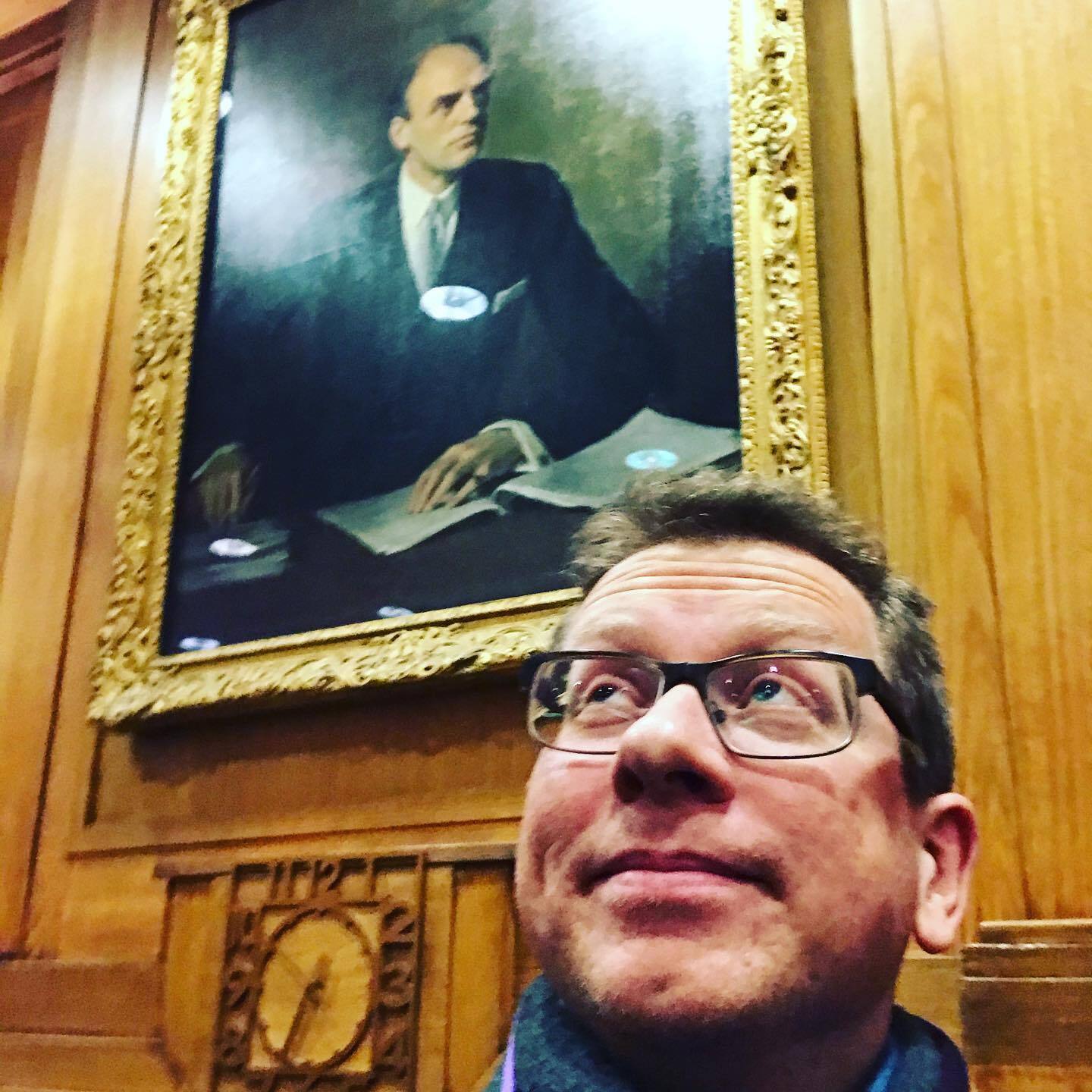
Intended as a trilogy, Auntie and Uncles comes out in 2023. Book 1 tells the BBC tale up to its launch, from the perspectives of four pioneers: Arthur Burrows, Peter Eckersley, Hilda Matheson and John Reith. Matheson only joins the BBC later - but she's somehow on hand for some key moments in British history. And she's awesome, so I had to include her.
But in researching the book, I was looking for a podcast about early broadcasting. I couldn't find one, so...
THE PODCAST:
When the pandemic hit, and my live performing work went, I saw the centenary approaching of Melba's famous 1920 broadcast. Not famous enough it seemed - I couldn't see anyone talking about it. No radio shows, no TV documentaries, and certainly no podcasts. So I started The British Broadcasting Century. The more I kept digging, the more stories I found, the more characters needing their day in the sun, the more old clips in need of rescue and a new audience... so here we are. And it's still growing. We've taken 50 episodes to reach the start of 1923. A LOT of stories to tell. The slow way. With a podcast, you can.
THE SHOW:
In 2022, for centenary year, I toured a show - The First Broadcast: The Battle for the Beeb in 1922. I'm a comedian, but wanted to put on a one-man show that told this story via two characters, Arthur Burrows and Peter Eckersley. It wasn't intended as a comedy. It came across that way, a bit.
That show's in storage for now, but ready to be dusted down if anyone wants it.
Meanwhile I have two other potential shows/talks: Auntie's First Year (a presentation on the landmarks of 1923) and The First Religious Broadcast (a re-enactment of what led to and what happened at Britain's first ever broadcast sermon, pre-BBC, in the summer of 1922).
Interested in either? Book me. Paul at paulkerensa dot com.
And buy the book.
More info on all this at paulkerensa.com/oldradio
Thanks for stopping by. Keep listening.